
Best Trigeminal Nerve Stimulation Devices in 2026

Looking for the best trigeminal nerve stimulation devices in 2026? These tools send mild electrical pulses to branches of the trigeminal nerve, often on the forehead, to support migraine comfort and head-related ease. Many people use them for acute or preventive needs as a drug-free approach that fits daily routines.
Explore the best electrical nerve stimulation devices, best phrenic nerve stimulation devices, and best repetitive nerve stimulation devices to compare other targeted neuromodulation technologies.
Discover supportive nerve stimulation devices at Vagus Insider.
How Trigeminal Nerve Stimulation Works for Head Comfort

The trigeminal nerve carries sensation from the face and head to the brain. External stimulation applies gentle electrical pulses through skin electrodes, usually on the forehead, to influence those pathways. This can help desensitize nerve activity linked to migraine and related discomfort.
Trigeminal nerve stimulation devices typically use adhesive electrodes or a headset form. Sessions last from several minutes to about an hour depending on the program. Acute modes address an attack already underway, while preventive modes support regular use to reduce frequency for many users. The approach stays non-invasive and can be self-administered at home once proper guidance is followed. Related nervous system tools that promote overall calm may also ease daily head tension for some people.
Key Factors When Choosing a Device
When choosing a nerve stimulation device, look for clear electrode placement that matches the intended nerve branches. Adjustable intensity helps users find a comfortable level. Separate acute and preventive programs add flexibility.
Prescription status, age range, and ease of daily wear matter for long-term consistency. Reusable designs with simple electrode care keep the process practical. Clinical guidance remains important before starting, especially for anyone with existing medical conditions or implanted devices.
Best Trigeminal Nerve Stimulation Devices in 2026
1. Pulsetto - Best Trigeminal Nerve Stimulation Devices in 2026

Description
Tailored Comfort:
Equipped with two detachable magnetic paddings designed to adapt to different neck sizes, delivering a secure and comfortable fit.
Advanced Pulsation Mode:
Introduces a flowing, wave-like stimulation pattern that aligns with your breathing to promote deeper relaxation of the nervous system.
Extended Battery Performance:
Provides up to 20% more battery life, allowing approximately 1.2 weeks of daily use on a single charge.
Improved Durability:
Built with reinforced materials to withstand consistent, everyday use over time.
Seamless App Experience:
Access the same 5 guided programs and enjoy a 14-day Premium trial, along with the full sound library and optional add-ons available in the Lite version.
What’s Included:
Pulsetto device, two magnetic paddings, 60g gel tube, USB-C charging cable, and user manual.
Safety Assurance:
FCC-certified and powered by the same ULRE technology as the Lite model. Medical consultation is advised for users with implantable devices.
Pulsetto - Your Peace & Better Sleep Partner

Pulsetto is a wearable wellness device designed to support relaxation by using vagus nerve stimulation (VNS). Through gentle electrical impulses applied to the neck, it helps activate the body’s natural calming response. This process encourages a state of relaxation, making it easier to fall asleep, stay asleep, and manage everyday stress more effectively.
Advantages of Pulsetto:
Stress Relief:
Helps reduce daily stress by stimulating the vagus nerve and shifting the body into a natural “rest and recover” mode.
Better Sleep Quality:
Supports deeper, more restorative sleep by calming the nervous system and promoting relaxation before bedtime.
Sharper Focus:
Encourages mental clarity and reduces brain fog, helping improve concentration throughout the day.
Improved HRV (Heart Rate Variability):
Enhances HRV, a key indicator of cardiovascular health and the body’s ability to handle stress.
Digestive Support:
Stimulates the gut-brain connection, contributing to better digestion and reduced bloating.
Support for Chronic Conditions:
Provides additional support for individuals dealing with ongoing stress, anxiety, or fatigue, helping improve overall well-being.
What’s Included:
- Pulsetto Vagus Nerve Stimulation Device
- USB-C Charging Cable
- Electrode Gel (approximately one month supply)
- User Guide
- Free Premium App Trial (includes 11 guided meditations, 54 breathing exercises, and 1,200 positive affirmations)
How Pulsetto Works:
Getting started with Pulsetto is quick and simple, with effects often felt in just a few minutes:
1) Apply a sufficient amount of gel to your neck or directly onto the electrodes.
2) Position the device comfortably around your neck.
3) Connect it to the Pulsetto mobile app on your smartphone.
4) Select your preferred program and activate the device via the app.
Once activated, the device delivers a soft, tingling, or vibrating sensation around the neck area. This gentle stimulation triggers the parasympathetic nervous system, helping the body relax and reducing overall stress levels.
2. Cefaly

Cefaly is an external trigeminal nerve stimulator that uses a self-adhesive electrode on the forehead. The pad sits between and just above the eyebrows so pulses can reach the supraorbital and supratrochlear branches. Those branches carry a large share of forehead and eye-area sensation into the brainstem.
The unit offers separate acute and preventive programs for adult migraine support. Acute use is a shorter block when an episode is building. Preventive use is a quieter daily session when the head is not already pounding. Intensity is adjustable so the first minutes can stay mild.
In the United States the reusable external device is sold without a prescription. Clean, dry skin helps the magnet or adhesive hold. Hair at the hairline can lift a pad and weaken the signal. Most people sit or lie still during a session rather than walk around.
Cefaly does not treat the neck or the vagus nerve. Its job is a forehead pulse. If tingling turns sharp or the skin under the electrode burns, the level comes down or the session stops.
3. Relivion

Relivion is a headset that stimulates trigeminal branches on the forehead and occipital branches at the back of the head in the same timed session. That dual contact is the point. Pain that wraps from brow to occiput can sit on more than one pathway.
The system is intended for acute migraine treatment and is available by prescription in the United States. A companion app logs sessions and helps a care team review use. Fit matters. If the frame slips, one electrode can lose skin contact while the other keeps pulsing.
Users usually sit still for the programmed window. The sensation is electrical, not magnetic. Intensity follows clinician guidance and personal comfort. Sweat, hair, and glasses arms can fight a stable seal.
Relivion is not a sleep-all-night forehead strip and not a neck wand. It is a multi-site head headset for a set block of time. Follow-up visits are part of prescription care. Skin under the contacts should stay intact. A new kind of weakness, vision change, or worst-of-life head pain belongs with urgent care, not a higher setting.
4. Monarch eTNS System

The Monarch external trigeminal nerve stimulation system sends gentle pulses through forehead electrodes. NeuroSigma’s related operations sit in the Los Angeles area. The generator is a small external box linked to conductive pads on the brow.
The main cleared use is attention-related support in children, with wear during sleep so the session can run for hours. That overnight window is different from a twenty-minute migraine program. Pads must stay on while the person turns in bed. Adhesion and a tolerable night intensity decide whether the dose is actually delivered.
Parameters are programmed under clinical oversight. Families are taught pad placement, skin checks, and when to take the system off. It is non-pharmacological. It still needs a care team.
Monarch is not a consumer migraine sticker sold next to a pharmacy shelf. Forehead trigeminal pathways are the target, but the goal and the wear time follow an attention protocol. Adult migraine tools and this nighttime pediatric system should not be swapped by guesswork. Irritated skin or poor sleep from a buzzing pad means the plan needs a review.
5. HeadaTerm

HeadaTerm is a portable forehead stimulator from WAT Medical. Adhesive electrodes sit on the brow to reach trigeminal branches used in migraine-related comfort routines. The generator is small enough for a drawer or a travel pouch.
Intensity is adjustable. Most people start low and only rise if the skin accepts the feel. Reusable electrode options help keep contact consistent across days. Clean skin is not optional. Oil, lotion, and leftover adhesive weaken the pulse.
Placement follows the usual forehead map: above the brows, centered enough to cover both sides of the supraorbital zone. Sessions happen at home. There is no neck clip and no arm band.
HeadaTerm is an electrical TNS-style tool, not a magnet and not a drug. If a session collides with an already raw forehead, skip that day. Sharp pain, a burn mark, or a rash under the pad is a stop sign. Travel use works when spare pads and a charged unit travel together. The device only works when the electrode actually stays on the brow for the full block.
6. Nerivio

Nerivio is a remote electrical neuromodulation device worn on the upper arm. It is often listed next to trigeminal tools because the clinical job is migraine support, not because the electrode sits on the trigeminal nerve. Stimulation on the arm is meant to engage conditioned pain modulation, a whole-body pain-control loop.
An app starts the session and stores use. The wearable can stay on while a person moves around a room. That is the convenience argument when a forehead headset feels like too much during an episode. Components are reusable. Access in the United States is by prescription, so a clinician sets expectations and checks fit.
The arm site must be clean and the band must sit on skin, not thick fabric. Intensity follows the guided program. Nerivio does not pace the phrenic nerve and does not pulse the supraorbital ridge. People compare it with brow devices when they want migraine neuromodulation without something on the face.
New or sudden severe head pain still needs medical review. An arm band is not a scan and not an emergency plan.
7. SAVI Dual

SAVI Dual is eNeura’s handheld single-pulse transcranial magnetic stimulation device for migraine. It does not glue an electrode to the forehead. It delivers a brief magnetic pulse aimed at cortical areas involved in head discomfort.
Positioning follows clinic instructions. The unit is held in a set spot, often at the start of an episode. The pulse is short. That is the opposite of a twenty-minute electrical drip on the brow. Prescription access in the United States includes provider oversight.
Technique matters more than wear time. A sloppy angle wastes the pulse. Hair thickness and how still the person can stay also change the feel of the session. SAVI Dual is grouped with non-invasive migraine neuromodulation, not with classic external TNS.
It will not run overnight. It will not massage the neck. People who cannot tolerate facial adhesives sometimes prefer this format. Anyone with magnet-sensitive implants needs a clinician’s clearance before this class of device. Worst-of-life or new neurological symptoms still go to urgent care.
8. gammaCore

gammaCore is a handheld non-invasive stimulator held to the side of the neck. Short sessions send electrical signals aimed at vagus pathways that also show up in migraine care. That is why it appears in the same shopping conversation as forehead TNS, even though the nerve is different.
Intensity is adjustable. The unit is small enough for a bag. Prescription access in the United States comes with clinical instructions for when to treat and how often. Conductive gel or a similar medium may be part of a clean contact.
Placement belongs on the side of the neck, not on the windpipe and not on the brow. A forehead TNS pad and gammaCore are not interchangeable doses of the same treatment. Some people use them in separate windows under a clinician’s plan. Others pick one site and stay there.
If the neck sensation is sharp, the level drops. Implanted electronics, significant heart-rhythm issues, or pregnancy need a medical check first. gammaCore is neuromodulation for selected head-pain and related uses. It is not a trigeminal forehead sticker.
9. External Forehead TENS Systems

Generic forehead TENS units sold through United States clinics and consumer channels put adhesive pads near trigeminal branches and run a portable generator. The setup looks like classic TENS: two contacts, a small box, adjustable pulse width and intensity.
These systems are simple. They are also less specific than a device built only for supraorbital migraine programs. A user can put pads too high in the hairline or too far toward the temple and change which fibers feel the current.
Clean skin and firm contact keep the signal even. Professional guidance helps when the person also has implants, numbness, or skin disease. Portable designs fit a desk drawer. They do not automatically include acute and preventive migraine modes.
This group is useful when someone already understands TENS and wants a brow site. It is easy to over-turn the dial. A strong sting is not a better dose. Stop for burns, swelling, or pain that feels unlike ordinary tingling. These units do not replace a diagnosis or a prescription migraine device when that is what a specialist recommended.
10. HeadaTerm 2

HeadaTerm 2 is WAT Medical’s later forehead unit for trigeminal-area pulses. The brow placement is the same idea as the original HeadaTerm line: supraorbital skin, adhesive contact, adjustable electrical stimulation for migraine-related routines.
Hardware updates usually focus on size, pad hold, and how easy the buttons are to use when the head already hurts. A travel pouch still makes sense. Spare electrodes still make sense. The first session should stay mild.
It remains an electrical forehead device. It is not SpringTMS and not a neck stimulator. Users who already learned a forehead map can transfer that habit. Oil, sunscreen, and sweat are still the enemies of contact.
If the newer model uses a different pad shape, the old pads may not fit. Read the skin-prep steps that ship with that unit. Stop for rash or a burn. HeadaTerm 2 belongs in the external TNS cluster because the nerve target is the brow, not because every firmware change creates a new medical category.
11. Sparrow Therapy System

The Sparrow Therapy System from Spark Biomedical is a wearable earpiece with several small electrodes. Those contacts can reach trigeminal branches and vagus branches around the outer ear. The platform is used under clinical direction, including supervised protocols such as withdrawal support.
The site is the auricle, not the forehead. Session feel, duration, and indication therefore differ from Cefaly-style TNS. An ear device can stay discreet. It can also irritate the canal or the cymba if intensity is high or the fit is poor.
Programs are prescribed. This is not a casual migraine sticker. It shows up in trigeminal discussions because cranial-nerve fibers in the ear include trigeminal twigs. It should not be sold in copy as a one-for-one brow replacement.
Keep the earpiece clean. Start at the instructed level. People with ear infection, implants near the head, or unexplained dizziness need clinician input first. Sparrow is neuromodulation at the ear. Forehead TNS is neuromodulation at the brow. Same family of nerves in a textbook. Different tools on a face.
12. iTENS

iTENS is a wireless TENS platform. Some users park a pod on the forehead or temple to pulse skin near trigeminal branches. An app sets mode and intensity. Gel pads replace dangling wires, which is useful if someone cannot stand leads across the face.
It is general TENS. It does not carry the same migraine-specific external TNS clearances as a dedicated brow medical device. That distinction belongs in plain view. A pod can still be helpful for people who already own the system and want a facial site.
Adhesion on curved, oily forehead skin is the weak point. Hairline placement can zap hair roots more than nerve twigs. Start low. If the feel is a sting or a burn, stop. Do not stack a full TENS face session with another headset the same hour unless a clinician mapped that plan.
iTENS will not read sleep stages or pace the diaphragm. It is a portable pulse. Site choice decides whether it is even in the trigeminal conversation.
13. Enso for Migraine
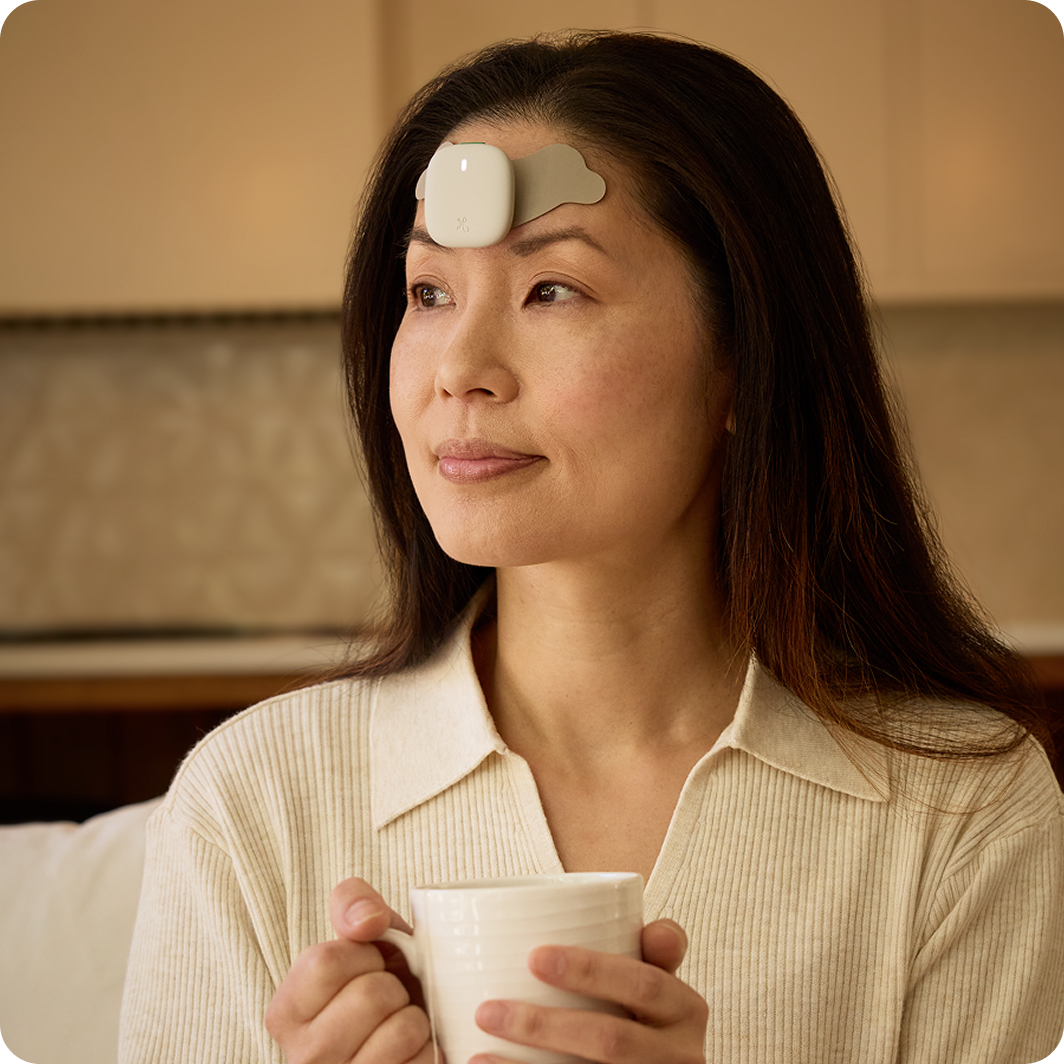
Enso for Migraine is an app-controlled forehead device from Hinge Health that delivers transcutaneous electrical stimulation through a contoured hydrogel pad placed at the center of the forehead. The system received FDA 510(k) clearance in April 2026 for both the acute treatment of migraine with or without aura and the preventive treatment of migraine in adults 18 years and older who have a physician diagnosis. It uses a specialized waveform designed for head sensitivity and includes a 60-minute automatic shutoff.
Access is currently tied to Hinge Health’s Migraine Care Program, which pairs the device with guided exercise therapy, trigger tracking, and support from a care team. In an internal feasibility study of more than 130 participants treating over 390 migraine attacks, 64 percent of users reported pain relief defined as at least a 30 percent reduction on a 0–10 scale. The device attaches magnetically to the pad and is managed through the Hinge Health app, allowing sessions during daily activities once the pad is in place. Hinge Health is based in San Francisco, California. Clean skin and proper pad adhesion remain important for consistent signal delivery, and the system is intended for use alongside other elements of a migraine care plan rather than as a standalone consumer purchase outside program eligibility.
- App-controlled wireless unit with magnetic attachment to a forehead hydrogel pad
- FDA-cleared for acute and preventive migraine treatment in adults 18 and older with a physician diagnosis
- Specialized waveform for head sensitivity and 60-minute automatic session shutoff
- Internal data from 130-plus participants showed 64 percent reporting at least 30 percent pain reduction across treated attacks
- Integrated with Hinge Health digital care that includes exercise therapy, trigger insights, and clinician support
14. ProlivRx
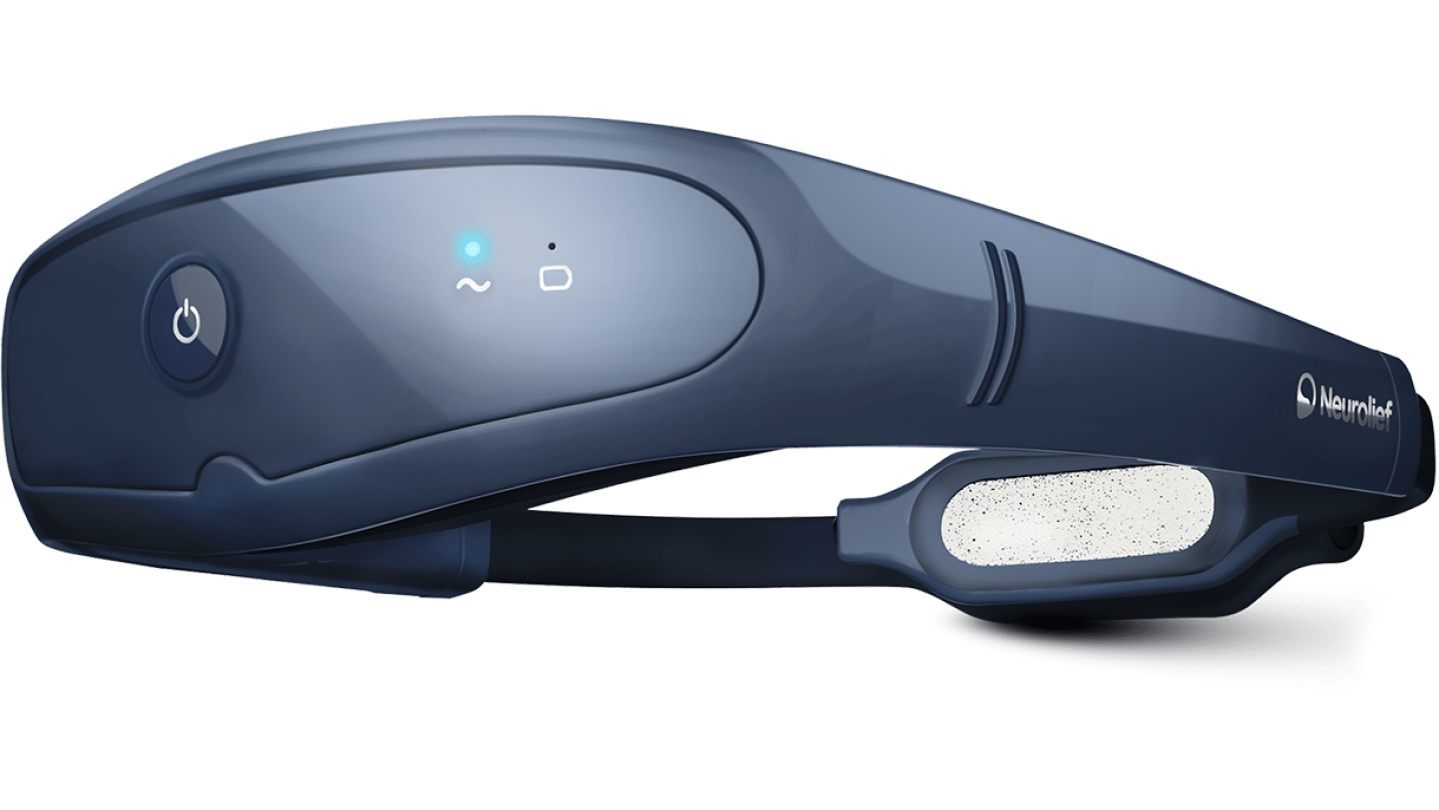
ProlivRx is a prescription, physician-directed headset system from Neurolief that delivers focal external combined occipital and trigeminal afferent stimulation. It received FDA Premarket Approval in late 2025 as an adjunctive treatment for major depressive disorder in adults who have not achieved satisfactory improvement from at least one prior antidepressant medication. The wearable places electrodes across the forehead and the back of the head to engage branches of the trigeminal and occipital nerves in the same session, sending signals toward brain networks involved in mood regulation.
Treatment is self-administered at home under ongoing clinician oversight, with a structured program typically spanning 8 to 16 weeks and remote monitoring through a digital platform. In the pivotal MOOD study, active treatment produced a greater mean reduction on the Hamilton Depression Rating Scale-17 compared with sham at 8 weeks, with further gains observed in an open-label extension. The most commonly reported adverse event was headache, and no serious device-related events were noted in the trial. Neurolief has U.S. operations focused on health-system and behavioral-health deployment. Sessions require stable electrode contact, and the system is not indicated for migraine treatment even though it shares dual-nerve targeting principles with other head-based neuromodulation tools.
- Multi-channel headset with electrodes contacting the forehead and occiput for concurrent occipital and trigeminal afferent stimulation
- FDA PMA-approved as adjunctive home therapy for major depressive disorder in adults with inadequate response to at least one antidepressant
- Structured 8- to 16-week program with physician direction and remote monitoring via a digital platform
- MOOD trial data showed greater HDRS-17 improvement with active treatment versus sham at 8 weeks, with continued gains in open-label extension
- Self-administered under clinical supervision; intended for mood-related pathways rather than primary migraine use
15. Truvaga Plus
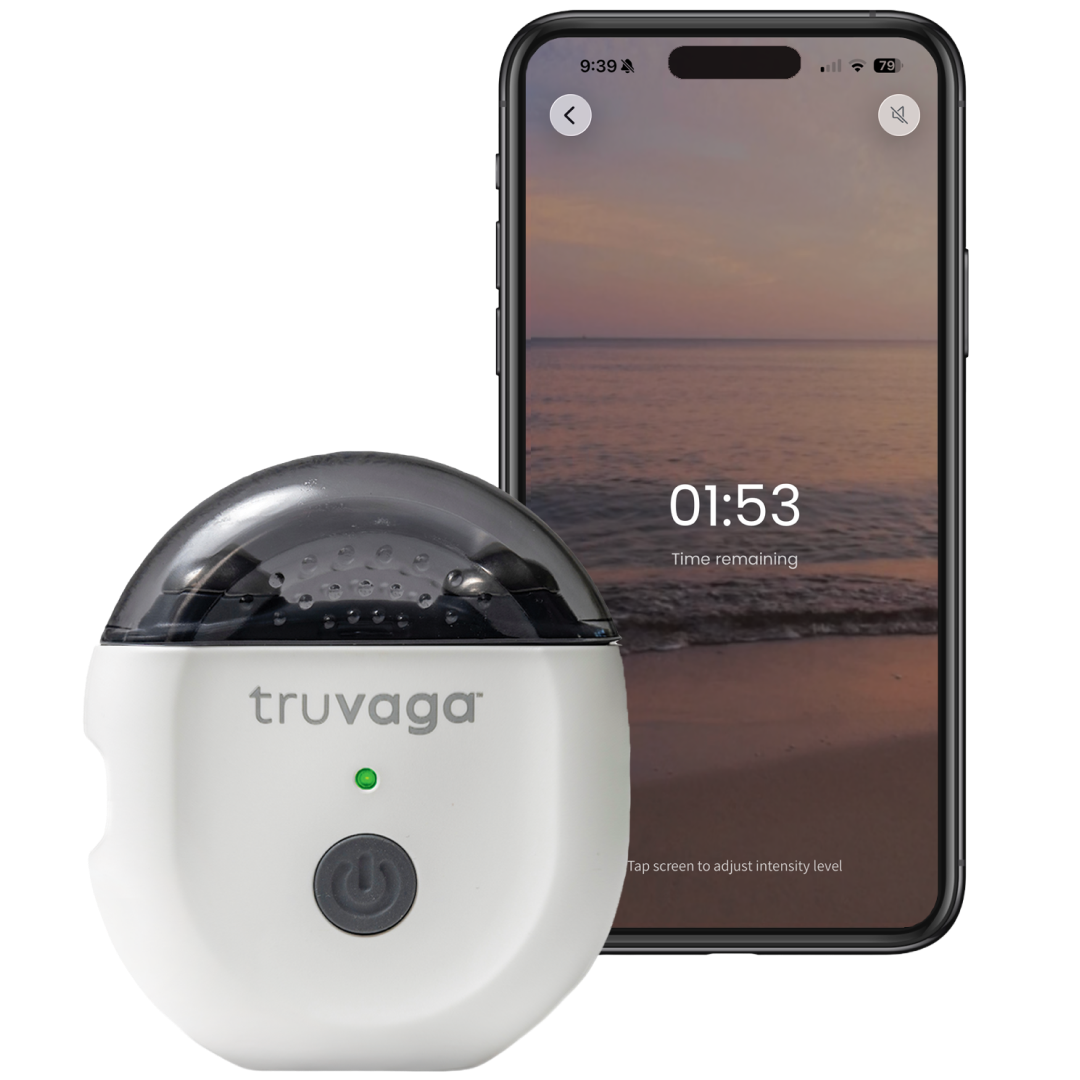
Truvaga Plus is a handheld, app-enabled device from electroCore that applies brief electrical pulses to the side of the neck to target the cervical branch of the vagus nerve. Sessions last two minutes and are controlled through a companion app that lets users adjust intensity until a comfortable tingling or slight lip-pull sensation appears. The unit shares core waveform parameters with electroCore’s prescription gammaCore platform, which carries FDA clearances for certain migraine and cluster headache indications, though Truvaga Plus itself is positioned as a general wellness device rather than a cleared medical treatment for headache. electroCore is based in Rockaway, New Jersey.
Conductive spray or gel supports skin contact, and placement is on the side of the neck rather than the windpipe or forehead. Company-reported user data after 30 days of use have included high percentages of people noting reduced stress and improved sleep, though these figures come from wellness tracking rather than controlled migraine trials. The device is rechargeable and compact enough for a bag. It is not indicated for direct supraorbital stimulation, and people with implanted electronics or certain cardiac conditions are advised to consult a clinician before use. Truvaga Plus therefore appears in broader neuromodulation discussions when neck-based autonomic support is under consideration alongside forehead trigeminal tools.
- Handheld cervical unit delivering short two-minute sessions via companion app with adjustable intensity
- Shares platform technology with electroCore’s gammaCore, which holds FDA clearances for selected headache indications
- Conductive medium required for skin contact on the side of the neck
- Company-reported 30-day wellness data noted high rates of users describing lower stress and better sleep
- Manufactured by electroCore in Rockaway, New Jersey; positioned for everyday nervous-system support rather than labeled migraine treatment
16. Generation 2.0 Monarch eTNS System
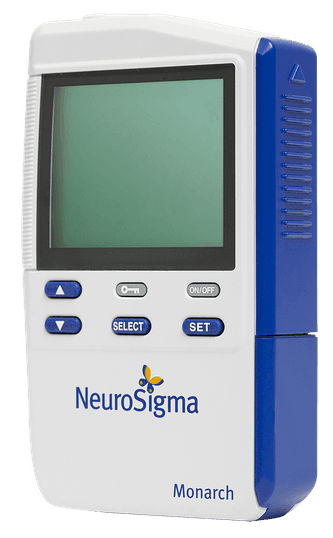
The Generation 2.0 Monarch eTNS System is an updated external trigeminal nerve stimulator from NeuroSigma cleared by the FDA in January 2024 for the same pediatric ADHD indication as the original device. It is indicated as a monotherapy for children ages 7 through 12 who are not currently taking prescription ADHD medication. The smaller pulse generator connects to a single-use adhesive forehead patch that delivers low-level electrical pulses to the supraorbital and supratrochlear branches during overnight sleep. NeuroSigma is based in Los Angeles, California.
The second-generation unit is roughly one-third the size of the first version, includes a color display, and offers a simplified interface while retaining the same external trigeminal stimulation approach. Treatment runs for several hours under caregiver supervision, with the patch applied at bedtime and removed in the morning. Supporting clinical work for the original system showed reductions on standard ADHD rating scales after several weeks of nightly use, and the updated hardware is intended to improve practicality for home routines. Skin integrity under the patch and consistent overnight adhesion remain key practical factors. The system is not cleared for adult migraine use, and any decision to start therapy belongs with a prescribing clinician who has reviewed the child’s full history.
- Compact rechargeable generator linked to a disposable forehead adhesive patch for overnight use
- FDA 510(k) cleared in 2024 as monotherapy for ADHD in children ages 7–12 not on ADHD medication
- Smaller form factor with color display and simplified controls compared with the original Monarch unit
- Delivers external trigeminal stimulation to supraorbital and supratrochlear branches during sleep under caregiver oversight
- NeuroSigma headquartered in Los Angeles, California; clinical foundation based on prior studies showing ADHD symptom score improvements with nightly therapy
Practical Tips for Consistent Use
Most trigeminal nerve devices work best with clean, dry skin and secure electrode contact. Starting at lower intensity and increasing gradually helps many users find a comfortable level. Combining sessions with quiet rest or dim lighting often improves the experience. Tracking attack patterns or daily comfort notes can reveal which programs fit best.
Non-invasive wellness tools from the best vagus nerve stimulators collection offer complementary support for overall calm that many link to easier head comfort. Related reading such as Pulsetto reviews provides additional context on different nerve stimulation approaches.
Where the Trigeminal Nerve Sits and Why It Matters
The trigeminal nerve is the main sensory nerve of the face. It has three branches. One covers the forehead and eye area. One covers the cheek. One covers the jaw. Those branches carry touch, pressure, and pain signals into the brainstem.
People comparing electrical nerve stimulation devices often want that map first. A pulse on the forehead is not a pulse on the neck. The target is different even when the gadget looks similar.
External trigeminal nerve stimulation usually sits on the upper branch, across the brow. Mild current through the skin can change how busy those pathways feel during a head-pain window or as a daily preventive habit. A headset that also reaches the back of the head is aiming at nearby occipital paths as well. That is still head-based work. It is not diaphragm pacing and it is not vagus work at the ear or neck.
A few lines keep the categories straight:
- Forehead pads aim at supraorbital and supratrochlear twigs of the trigeminal nerve
- Neck or ear wearables in non invasive vagus nerve stimulation devices aim at a different cranial nerve
- Chest or ICU systems on the phrenic nerve stimulation side drive the diaphragm, not the face
- Repeat-test tools on the repetitive nerve stimulation side belong in clinic labs
Migraine and other head-pain patterns often involve the trigeminal system. That is why this hardware shows up next to articles on vagus nerve stimulation devices for migraines and devices for nerve pain. The shared theme is a quieter signal into a noisy pain network. The electrode site still decides which nerve is in play.
Prescription rules, age limits, and medical history belong with a clinician when the device is a regulated migraine tool. Home TENS on the brow is a looser category and still needs clean skin and a low start.
How Sessions Fit Real Days, Sleep, and Stress
A forehead session only works if it can happen on a normal day. Bright offices, travel, and late screens all change how the head feels before a pulse even starts.
Preventive use is a quiet daily block, often when the head is not already pounding. Acute use is a shorter block when an episode is building. Those two jobs need different patience. Preventive work is boring on purpose. Acute work asks for a still room and dim light.
Stress and sleep sit in the same loop. A wired evening can load the same pathways a device is trying to settle. Slow breathing and a darker wind-down pair with head-based stimulation the way they pair with vagus nerve stimulation techniques. Guides on how to stimulate the vagus nerve and nervous system reset strategies treat that load as part of head comfort, not a side topic.
A simple day stack looks like this:
- One planned forehead or headset session if that is the prescribed or chosen plan
- Less glare and fewer stacked tasks when an episode is likely
- A calmer evening so sleep does not start from a spike
- A separate neck or ear tool only when the goal is body-wide rest, not brow-nerve input
Sleep-focused pages such as vagus nerve stimulation devices for sleep speak to overnight arousal. That is useful context when head pain and poor sleep feed each other. It does not turn a sleep wearable into a trigeminal device.
Jaw clench, sinus pressure, and neck tightness can mimic or worsen trigeminal noise. Softening those areas is support, not a substitute for a device built for the brow. Stomach vagus nerve massage and other body habits help the rest of the nervous system. The electrode on the forehead still has one job.
Stop a session if tingling turns sharp, if skin under a pad burns, or if vision or speech changes in a new way. Those signs belong with urgent care, not a higher intensity setting.
Clinical Evidence and Outcomes for Trigeminal Nerve Stimulation Devices
Trigeminal nerve stimulation devices send mild pulses through the skin on the forehead. These pulses target branches of the trigeminal nerve that carry sensation from the face and head. Researchers have looked at how this approach changes pain signals during migraine attacks and over longer periods of regular use.
Studies on external forehead stimulation show changes in how the brain processes head pain. Some trials tracked people who used daily sessions and reported fewer days with strong head discomfort. Other work examined sessions started when an attack was already underway and measured shifts in pain intensity after the session ended. Results vary from person to person because migraine patterns differ. One study design does not always match another, so findings stay tied to the specific group and protocol tested.
Longer use may support neuroplasticity. Regular signals can influence activity in brain areas that stay more active in people who experience frequent migraine. This does not replace other care. Many people pair forehead sessions with routines that support the rest of the nervous system. Approaches such as vagus nerve stimulation devices for migraines appear in separate discussions of neck-based or ear-based tools that also aim at pain pathways through different nerves.
Evidence continues to grow. Clinics and research groups keep testing session length, intensity settings, and who responds best. People who already track sleep or stress often notice whether forehead sessions fit their overall pattern of head comfort.
Safety, Side Effects, and Contraindications of Trigeminal Nerve Stimulation
Most people tolerate forehead trigeminal nerve stimulation well. Common effects stay mild and stop after the session ends. Users sometimes feel sleepiness during or right after a session. Mild skin redness under the electrode can appear. A small number of people notice temporary headache or nausea. Skin allergy at the contact site remains rare.
These effects usually fade once stimulation stops. Clean, dry skin and proper electrode placement reduce irritation. Starting at a lower intensity and raising it only if the sensation stays comfortable helps many users. If tingling turns sharp or the skin burns, the session ends and intensity drops on the next try.
Certain conditions call for extra care. People with metal implants in the head or neck generally avoid these devices. Those with pacemakers, defibrillators, or other implanted electrical equipment need medical input first. A history of seizures raises questions for some users. Open wounds, rashes, or irritated skin on the forehead make electrode contact unsuitable until the area heals. Individuals with unexplained head pain or recent head injury seek professional review before any home session.
Unlike some medications, these devices do not create drug interactions or carry a risk of dependence. Still, they form one part of a larger plan. People managing frequent attacks sometimes also look at vagus nerve stimulation for chronic pain or sleep-focused tools when stress and poor rest worsen head symptoms. Medical guidance stays useful when other health conditions exist.
Latest News In 2026
Research on trigeminal nerve stimulation in 2026 keeps separating forehead-only pads from multi-site headsets. Forehead devices stay the simplest home option for many adults. Headsets that also reach the back of the head attract interest from people whose pain moves from the brow toward the occiput. Night-wear versions face practical tests around adhesion and comfort while someone sleeps and turns.
Clearer labeling appears between devices built for migraine programs and general TENS units placed on the brow. Readers who arrive from searches about the best vagus nerve stimulation techniques or vagus nerve ear stimulation sometimes compare the different nerve targets. A forehead pad does not perform the same role as a neck or ear tool.
Attention research still uses external forehead stimulation in some clinic-led programs for children and adults. Those protocols remain separate from everyday migraine routines. Home users continue pairing short forehead sessions with quieter evenings, less screen glare, and tools that support heart rate variability. The focus stays on reliable skin contact and matching the program to the day’s needs rather than stacking every available nerve tool at once.
FAQ
Who can benefit from trigeminal nerve stimulation devices?
Adults seeking drug-free support for migraine and head-related discomfort often turn to external trigeminal nerve stimulation. The approach targets pathways that carry sensation from the face and forehead. Some systems address other needs such as attention-related challenges in children. A healthcare provider can review individual history to confirm suitability. Consistent use of the right nerve stimulation device supports daily comfort for many people who prefer non-invasive options.
How long do typical sessions last?
Acute programs for an ongoing episode commonly run from several minutes up to about one hour. Preventive programs tend to be shorter and are used on a regular schedule. Exact timing depends on the chosen mode and the specific nerve stimulator design. Users often complete sessions while resting or during quiet moments in the day. Building a simple routine around preferred session lengths helps maintain consistency.
Are these devices used only during an attack?
Many vagus nerve stimulation devices offer both acute modes for an episode already underway and preventive modes for ongoing support. Preventive sessions focus on regular application to influence overall patterns of head comfort. Acute modes provide targeted input when discomfort begins. The dual approach gives flexibility based on current needs. Matching the mode to the situation supports more complete day-to-day management.
What should users expect during the first few sessions?
A mild tingling or fluttering sensation under the electrodes is common at the start. Most people adjust to the feeling within a short time. Keeping intensity at a comfortable level and ensuring clean electrode contact produces steadier results. Sessions often feel more familiar after a few uses. Quiet surroundings can make the experience smoother while the body adapts to the signals.
How does electrode placement influence results with trigeminal nerve stimulation?
Proper placement on the forehead targets the supraorbital and supratrochlear branches of the trigeminal nerve most directly. Secure contact without gaps helps the pulses reach the intended pathways. Clean, dry skin improves adhesion and signal delivery. Adjusting position slightly within recommended guidelines can improve comfort for some users. Consistent placement across sessions supports more reliable outcomes over time.
What is trigeminal nerve stimulation?
It is a mild electrical pulse delivered through the skin to branches of the trigeminal nerve, most often on the forehead. The aim is to change how those sensory pathways fire during migraine or other head discomfort. The method is external. No implant is required for the common home and clinic-adjacent devices in this group.
Is this the same as vagus nerve stimulation?
No. The trigeminal nerve serves the face and head. The vagus nerve runs from the brainstem through the neck into the chest and gut. A brow electrode and a neck band are not doing the same job. The best ways to stimulate the vagus nerve covers the vagus side. Head-pain devices stay on facial branches.
Can it be used with other nerve tools?
Some people use a forehead session for head pathways and a separate neck or ear session for whole-body calm. Those are two targets, not one stronger dose. Space them out if the skin or the nervous system feels overloaded. A clinician should weigh combinations when a device is prescription-only.
Does placement on the forehead always mean the trigeminal nerve?
Most of the time, yes, when the pad sits over the brow and between the eyes. That zone maps to the upper branch. Pads on the cheek or jaw would reach other branches. Pads on the back of the head lean toward occipital nerves. Site first. Brand second.
When is medical care needed instead of a home session?
New or sudden worst-of-life head pain, weakness, confusion, fever with stiff neck, or head pain after a blow needs urgent care. A home vagus nerve stimulator is not a scan and not a diagnosis. Ongoing migraine care still belongs with a clinician who can match the tool to the pattern.
How does forehead electrode placement affect the signals that reach the trigeminal nerve?
Forehead electrode placement decides which branches of the trigeminal nerve stimulation receive the mild pulses. When the pad sits centered between and just above the eyebrows, it reaches the supraorbital and supratrochlear fibers that carry sensation from the upper face. A gap or shift toward the hairline can reduce contact and change how evenly the signal spreads. Clean dry skin helps the adhesive stay flat so the pulses remain consistent across the full session. Users who check placement each time often find the sensation stays milder and more even.
What happens if a session overlaps with an already sensitive forehead?
An already sensitive forehead can make the usual tingling feel sharper or more noticeable. Many people pause the session and wait until the skin settles before trying again. Mild redness or tightness under the pad tends to ease once contact stops and the area stays dry. Skipping that day keeps the electrode from adding extra irritation on top of existing sensitivity. Tracking which days the forehead feels raw helps users plan sessions around calmer skin rather than forcing a routine.
Can trigeminal nerve stimulation sessions fit into an evening wind-down routine?
Short preventive trigeminal nerve stimulation sessions can sit before quieter evening habits for some users. Dim lighting and fewer bright screens after the session support the same pathways the device targets. People who also use tools for overall calm sometimes space the forehead work from other sessions so the nervous system does not feel overloaded. Pairing the routine with simple rest afterward lets the mild signals blend into the wind-down instead of standing out as a separate step.
Why do some users notice sleepiness during or after a forehead session?
Sleepiness during or after a forehead session comes from the way the pulses influence brainstem areas linked to relaxation in certain people. The feeling stays temporary and fades as the body adjusts. Sessions done while sitting or lying still make the drowsiness easier to notice because movement does not mask it. Most users simply rest until the sensation passes rather than starting tasks that need full alertness. Over repeated use, the response often becomes more predictable so people can plan around it.
How do users decide between a short session during an attack and a daily shorter session?
Users match the session type to the current state of head comfort. A longer session started when discomfort is already building aims at the active pain signals right away. A shorter daily session used on calmer days supports the pathways over time without waiting for an attack. Tracking how each approach affects the next few days gives clearer feedback than judging a single session. Consistency with the chosen mode matters more than switching between them often. People who also manage related discomfort through vagus nerve stimulation for nerve pain sometimes note how the two different nerve targets complement each other across the week.
Read Also:
Pulsetto Reviews 2026: Does This Vagus Nerve Stimulator Actually Work?
Best Ways to Reduce Oxidative Stress in 2026
Best Ways to Reduce Stomach Inflammation in 2026
Top VNS devices
Explore vagus nerve tools and find the approach that fits your routine.
Learn more You'll be taken to an external site.- Choosing a selection results in a full page refresh.
- Opens in a new window.